

Introduction
The NHS has begun to roll out its 2025/2026 Joint Capital Resource Use Plans (JCRUPs) for Integrated Care Boards (ICBs). These are the types of buyer signals the top suppliers monitor that make or break public sector sales strategies. Search NHS tenders in the Stotles tender search tool.
We’ve identified £6.3b in confirmed funding across 32 of the 42 published plans. It includes:
- £653m for IT and digital (covering IT, digital systems, and frontline digitisation)
- £1.67b for infrastructure (including new hospitals, estates modernisation, and community facilities)
- £466m for equipment (major medical equipment, diagnostics, and digital-enabled devices)
This report breaks down the capital plans sourced directly from official ICB publications so you don't have to. It includes:
- The top funded ICBs for 2025/2026 and what they are investing in.
- ICBs seeing growth and decline and, how you can capitalise on both.
- Your next steps in turning ICB capital plans into pipeline.
As with previous years, some ICB plans have yet to be published. Where gaps remain, those boards are excluded from this analysis, but we’ll continue to update our data as new information becomes available.
Funding breakdown
By NHS region
The 2025/26 capital plans show strong upward momentum across most NHS regions, with notable growth in the Midlands (£1.3b), North East & Yorkshire (£1.3b), and London (£1b), together accounting for the bulk of new spend.
The South West (£574.7m) was the only region to see a contraction, reflecting shifts in national funding priorities and project phasing.
By ICB
Full table of 32 ICBs (by clicking on the ICB name, you can visit the buyer profile on the Stotles platform to dive deeper into the JCRUP, procurement activity, top suppliers they are working with and key contacts controlling budgets).
| Name of ICB | 24/25 CDEL (£m) | 25/26 CDEL (£m) | YoY change (%) |
|---|---|---|---|
| Bedfordshire, Luton & Milton Keynes (BLMK) | 94.9 | 152.8 | 60.96% |
| Birmingham & Solihull (BSOL) | 136.1 | 195.6 | 43.72% |
| Black Country | 184.5 | 162.4 | -12.01% |
| Bristol, North Somerset & South Gloucestershire (BNSSG) | 168.0 | 185.0 | 10.12% |
| Buckinghamshire, Oxfordshire & Berkshire West (BOB) | 204.6 | 202.6 | -1.00% |
| Cambridgeshire & Peterborough (C&P) | 205.1 | 204.5 | -0.29% |
| Cheshire & Merseyside (C&M) | 431.1 | 497.0 | 15.28% |
| Cornwall & Isles of Scilly (CIoS) | 105.2 | 83.5 | -20.62% |
| Coventry & Warwickshire (C&W) | 91.0 | 90.0 | -1.10% |
| Derby & Derbyshire (JUCD) | 165.8 | 144.0 | -13.15% |
| Devon | 200.1 | 109.8 | -45.13% |
| Frimley | 89.7 | 105.3 | 17.44% |
| Gloucestershire | 59.6 | 81.8 | 37.25% |
| Herefordshire & Worcestershire (H&W) | Not found | 66.6 | - |
| Hertfordshire & West Essex (HWE) | 137.2 | 149.5 | 8.97% |
| Humber & North Yorkshire (HNY) | 178.2 | 217.8 | 22.23% |
| Kent & Medway (K&M) | Not found | 186.4 | - |
| Leicester, Leicestershire & Rutland (LLR) | 112.3 | 95.5 | -14.94% |
| Norfolk & Waveney (N&W) | 187.5 | 286.5 | 52.80% |
| North East & North Cumbria (NENC) | 363.5 | 379.7 | 4.46% |
| North West London (NWL) | 335.7 | 435.4 | 29.70% |
| Northamptonshire | 69.5 | 101.3 | 45.76% |
| Nottingham & Nottinghamshire (N&N) | 207.4 | 171.4 | -17.36% |
| Shropshire, Telford & Wrekin (STW) | 107.2 | 183.6 | 71.27% |
| Somerset | 96.4 | 114.6 | 18.88% |
| South East London (SEL) | 195.5 | 318.0 | 62.66% |
| South West London (SWL) | 257.8 | 257.6 | -0.08% |
| South Yorkshire (V2) | 161.0 | 206.0 | 27.95% |
| Staffordshire & Stoke-on-Trent (S&SoT) | 108.2 | 99.9 | -7.67% |
| Suffolk & North East Essex (SNEE) | 169.6 | 150.6 | -11.20% |
| Sussex | 232.6 | 222.6 | -4.30% |
| West Yorkshire | 334.5 | 450.6 | 34.71% |
By theme
There are three core areas where the ICBs are showing promise for suppliers to align with their priorities. These are IT and digital, infrastructure and construction, and equipment and machinery.
| Name of ICB | Tech allocation (£m) | Infrastructure allocation (£m) | Equipment allocation (£m) |
|---|---|---|---|
| Bedfordshire, Luton & Milton Keynes (BLMK) | 2 | 43.9 | 0.9 |
| Birmingham & Solihull (BSOL) | 40.5 | 96.55 | 35.1 |
| Black Country | 53.1 | 291.22 | 14.05 |
| Bristol, North Somerset & South Gloucestershire (BNSSG) | 7 | Not specified | 52 |
| Buckinghamshire, Oxfordshire & Berkshire West (BOB) | 56 | 25.1 | 47 |
| Cambridgeshire & Peterborough (C&P) | 5.2 | 102 | 12 |
| Cheshire & Merseyside (C&M) | 54.8 | 124.2 | Not specified |
| Cornwall & Isles of Scilly (CIoS) | 24.6 | 12 | 9.2 |
| Coventry & Warwickshire (C&W) | Not specified | Not specified | Not specified |
| Derby & Derbyshire (JUCD) | 20.55 | 39.7 | 17.1 |
| Devon | 55.8 | 49.6 | 57.4 |
| Frimley | Not specified | 43.4 | Not specified |
| Gloucestershire | 1 | Not specified | Not specified |
| Herefordshire & Worcestershire (H&W) | 10.5 | 61.7 | 9.8 |
| Hertfordshire & West Essex (HWE) | 4.5 | 25 | 14.5 |
| Humber & North Yorkshire (HNY) | 68.4 | 80 | 17.3 |
| Kent & Medway (K&M) | Not specified | 3.9 | 3.9 |
| Leicester, Leicestershire & Rutland (LLR) | 23.3 | 32.9 | 8.3 |
| Norfolk & Waveney (N&W) | 33.3 | 66.7 | 3.7 |
| North East & North Cumbria (NENC) | 14.1 | Not specified | 14.4 |
| North West London (NWL) | 37.2 | 28.3 | 10.7 |
| Northamptonshire | 11.2 | 78.8 | 10.7 |
| Nottingham & Nottinghamshire (N&N) | 25.4 | 9.9 | 12.3 |
| Shropshire, Telford & Wrekin (STW) | Not specified | 107.85 | 0.2 |
| Somerset | 25.1 | 19.6 | Not specified |
| South East London (SEL) | Not specified | Not specified | Not specified |
| South West London (SWL) | Not specified | 19 | Not specified |
| South Yorkshire (V2) | 52.1 | 25 | 79.5 |
| Staffordshire & Stoke-on-Trent (S&SoT) | Not specified | 42 | Not specified |
| Suffolk & North East Essex (SNEE) | Not specified | Not specified | 20.3 |
| Sussex | 8.3 | 26.1 | 5.5 |
| West Yorkshire | 19.3 | 224 | 11 |
Rising ICB budgets means more open doors for suppliers
For suppliers, focusing on ICBs with rising capital allocations can unlock the strongest opportunities.
In 2025/2026, 17 ICBs reported year-on-year growth in their capital budgets, with several showing double-digit increases.
Below, we highlight the top ICBs tanked by percentage change YoY.
Spotlight on West Yorkshire ICB
West Yorkshire is a standout growth region in 2025/26, with capital funding up 34.7% to £450.6m.
Investment is spread across digital (£19.3m), infrastructure (£224m), and equipment (£11m), offering suppliers opportunities in digital health, estates, and clinical assets.
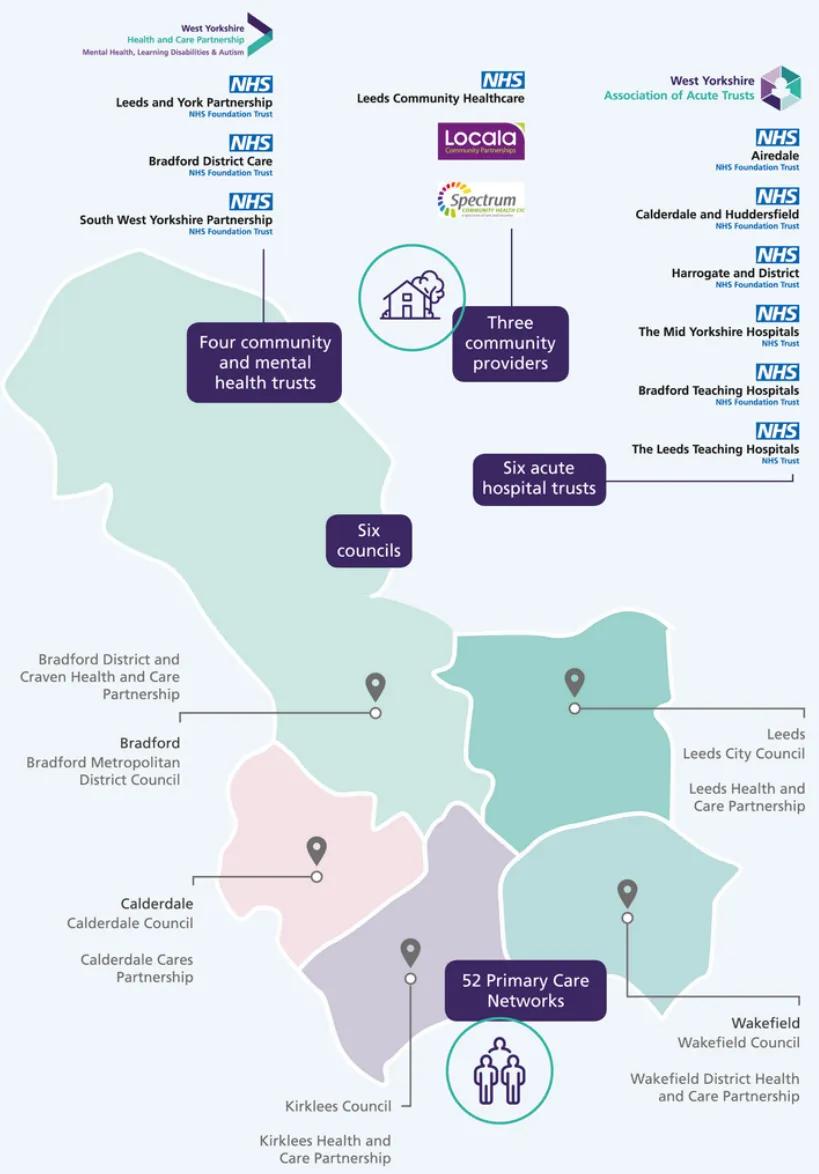
Below is a map of the NHS organisations that fall under West Yorkshire ICB.
The system also carries a heavy £862m backlog, of which £590m is critical (notably Airedale RAAC and Leeds Teaching Hospitals), driving demand for safety works and new build schemes.
While cash pressures, inflation, and IFRS16 accounting pose delivery risks, the ICB’s strong capital envelope and push on Net Zero create clear entry points for suppliers across construction, digital, equipment, and sustainability solutions.
| Organisation | 2025/26 CDEL (£m) | Key Projects (2025/26) |
|---|---|---|
| Airedale NHS FT | £101.3m | RAAC risk-management programme (~£23m) NHP enabling works (up to £60m; car park, service re-provision) EPR deployment (£7m; FBC approved) |
| The Leeds Teaching Hospitals NHS Trust | £99.9m | £21m WYAAT Aseptic Pharmacy Hub (design finalising; partner appointed) Chapel Allerton Surgical Hub (FBC summer 2025; completes 2027) |
| Calderdale & Huddersfield NHS FT | £46.3m | Hospital reconfiguration (FBC due 25/26) £15m Calderdale Royal multi-storey car park (completes Spring 2026) Huddersfield Pharmacy Specials enabling works |
| Bradford Teaching Hospitals NHS FT (BTHFT) | £42.0m | £24.8m Endoscopy Unit (8 rooms; completes late 2025) £18.2m St Luke’s Surgical Day Case Unit (>5,000 extra procedures/year) £16.6m Maternity improvement programme (3 years) |
| Mid Yorkshire Teaching NHS Trust | £39.0m | New surgical hub opened at Dewsbury Ward refurbishment bids planned Convergent EPR (OBC approved; tenders & FBC next) SDEC expansion (+4% ED performance) |
| Bradford District Care NHS FT | £36.6m | Lynfield Mount mental health redevelopment (~£65m total; £3m in 25/26; £50m PDC + £15m system top-up) |
| Yorkshire Ambulance Service | £17.2m | Replacement of 73 ambulances (Cat-2 performance improvement) EV charging roadmap under net zero plan |
| Leeds & York Partnership NHS FT | £18.9m | Not specified. |
| Leeds Community Healthcare NHS Trust | £9.7m | Not specified. |
| ICB – Primary Care | £5.3m | Not specified. |
Hot spots for suppliers
Based on funding allocation and where West Yorkshire's priorities are focused, these hotspots present the best opportunities for suppliers.
- CIR / Estates Safety: Target lots at Airedale, LTHT, MYTT, and CHFT; near term award volume is concentrated in backlog and risk reduction.
- Surgical & diagnostics capacity: Track the Leeds surgical hub, Bradford endoscopy and day-case schemes, and new diagnostic builds; opportunities in clinical equipment, digital theatres, and fit-out.
- Digital / EPR: Position for convergent EPR procurements at MYTT, the continuing EPR at Airedale, and digital infrastructure across trusts.
- Fleet & logistics: Yorkshire Ambulance Service replacement pipeline and the wider fleet line (£31.4m total) signal opportunities for vehicle supply and depot electrification.
ICBs in decline, but pockets of demand remain
Not all ICBs are seeing growth in 2025/2026.
This year, 13 ICBs reported year-on-year reductions in their capital budgets, with some experiencing double-digit declines. These cuts highlight regions where funding is tightening and where procurement opportunities will be more limited and focused on essential projects only.
Below, we spotlight the ICBs with the largest budget reductions for 2025/26, showing both the net and percentage change compared to the previous year.
Spotlight on Devon ICB
Devon has seen the sharpest budget decline in 2025/26, with capital funding down 45% from £200.1m to £109.8m.
Despite the cut, it remains one of the most transparent systems in funding allocation, with substantial allocations across technology (£55.8m for EPRs, cyber upgrades, digital replacements), infrastructure (£49.6m for radiotherapy, UEC, SDEC and CDC schemes), and equipment (£57.4m for LINAC, MRI, and diagnostics).
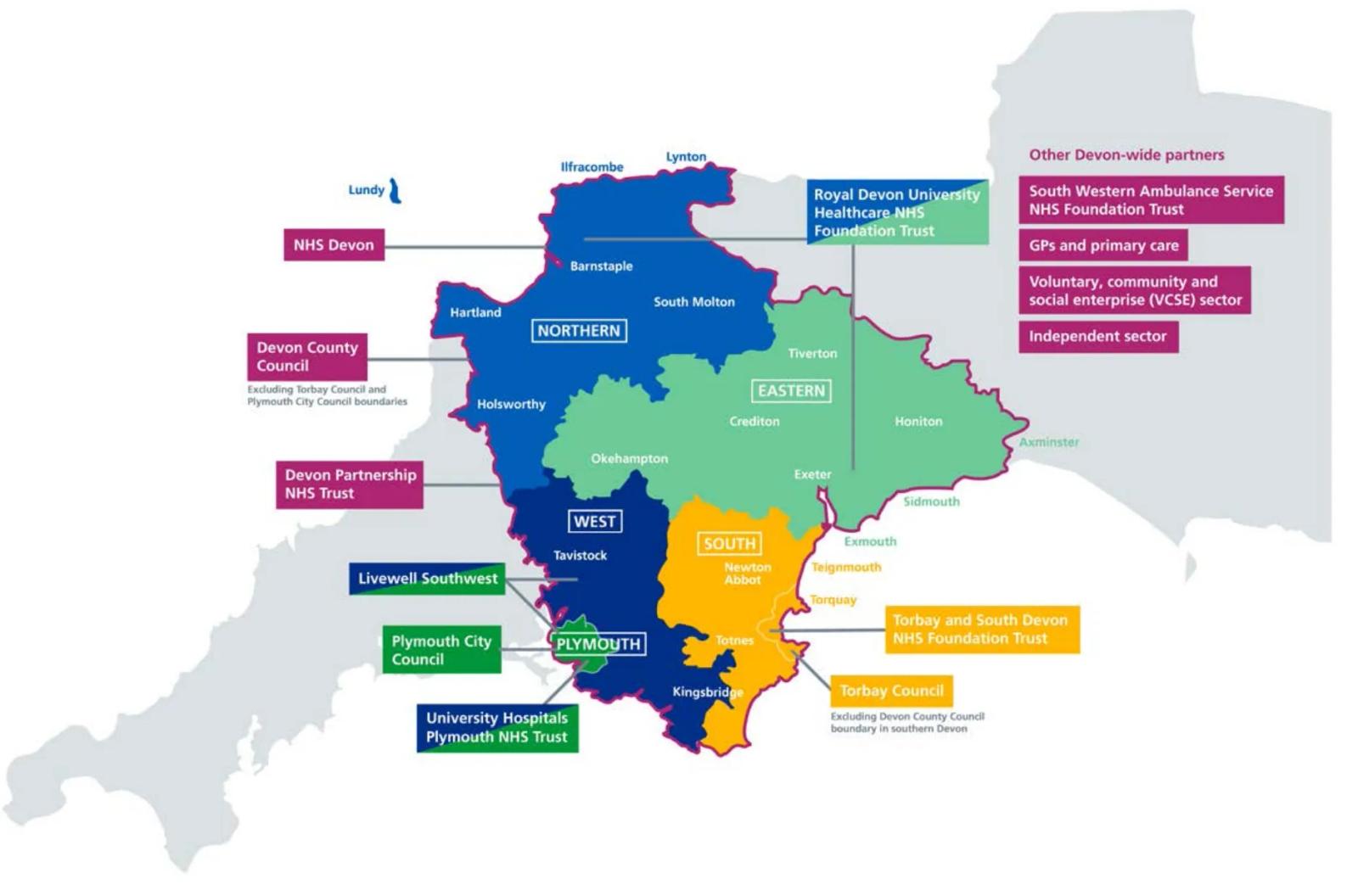
Below is a map of the NHS organisations that fall under Devon ICB.
Funding pressures mean many bids (~£114m+) outstrip allocations, forcing deferrals of urgent schemes such as nuclear medicine, renal dialysis, and pathology upgrades.
Significant backlog risks (£84m at RDUH; £22.5m at DPT), lease commitments overshooting allocations by £32m, and inflationary cost pressures compound the challenge.
| Organisation | 2025/26 CDEL (£m) | Key Projects (2025/26) |
|---|---|---|
| University Hospitals Plymouth | £42.1m | NHP (£33.8m) Radiotherapy bunker (£20m lease) Community Diagnostic Centre (£11.5m) SDEC Phase 2 (£2.1m) |
| Royal Devon University Healthcare | £38.6m | Endoscopy expansion (£5.6m) ED redevelopment (£1.9m) Sexual Assault Referral Centre (£1.2m) Helipad at North Devon (£1.5m) |
| Torbay & South Devon | £21.3m | EPR (£14.2m, go-live 2026) UEC expansion (£9.2m) Surgical Admissions relocation (£6m) Ophthalmology diagnostic hub (£2.1m) Oral & Maxillofacial service expansion (£4m) |
| Devon Partnership Trust | £7.8m | Mental health ward upgrades (Russell Clinic & Oceanview, £1m PDC) Solar/battery projects (£3m) R&D modular build (£0.7m) |
| Devon ICB | £4.7m | Not specified. |
Hot spots for suppliers
Based on funding allocation and where West Yorkshire's priorities are focused, these hotspots present the best opportunities for suppliers.
- Digital health & EPR: Torbay EPR (April 2026 go-live), RDUH IT/digital replacement, system BI projects.
- Diagnostics & treatment capacity: Plymouth CDC, Exeter ED, Torbay ophthalmology lanes, cath labs, MRI builds.
- Equipment replacement: LINAC, NICU incubators, urgent replacements (contingency pool).
- Mental health estates: DPT ward redevelopments, anti-ligature works, modular R&D build.
- Construction & estates safety: backlog remediation at RDUH & Torbay; new radiotherapy bunker, helipad, surgical admissions units.
- Net zero & sustainability: Solar PV, battery storage, LED retrofits, heating system replacements.
Recommendations for suppliers
1. Dive deeper into ICB capital plans
- Use our linked spreadsheet and AI-led Documents feature on our platform to search through all of the 2025/26 JCRUPs and dive deeper into the signals that matter most to your organisation.
- We illustrated above how West Yorkshire has £224m in infrastructure allocations across projects like Airedale rebuild and Leeds aseptic hub, while Devon has deferred schemes like nuclear medicine and pathology labs.
2. Explore competitor activity
- Use Stotles' supplier profiles to analyse who’s already supplying each ICB, what contracts they are currently linked with and when these contracts are due to expire.
- If you’re a mid-sized IT supplier, see where Cerner or Epic are embedded (e.g. London, South West) and look for gaps in secondary contracts like digital front door or interoperability projects.
3. Map routes to market most used by the NHS
- Our platform connects JCRUP funding allocations to actual procurement pathways (direct awards, frameworks, and dynamic markets) so that suppliers can be where the buyer is when it's time to buy.
- Based on past analysis of NHS buyers, procurement frameworks like G-Cloud, Technology Products & Associated Services, Non Clinical Staffing, and Digital Workplace Solutions are used frequently by the NHS at a regional level..
4. Track regions under funding pressure
- Use Stotles to spot ICBs in decline (like Devon, down 45%). These regions reprioritise heavily and still buy critical replacements looking for value and cost-effective solutions.
- Devon cut overall spend but still allocated £57.4m to equipment, including LINACs and MRI. Suppliers who understand these “must-do” spend lines can still win in contracting markets.
5. Identify strategy partnership opportunities
- Large capital projects often need supply chains and many large suppliers winning contracts require partners with differentiated offerings to deliver on the full request.
- For Airedale’s £60m+ NHP enabling works, construction primes will need subcontractors for roofing, MEP, and digital integration. Stotles helps you see who’s leading and where you can slot in.
These are five recommendation to get moving quickly using the ICB JCRUPs. For more advice on how to build a successful NHS strategy, reach out to one of our team to learn more.
Next steps with Stotles
There is £6.3b in confirmed capital for 2025/26 live across 32 ICBs.
Now is the moment to be proactive and set a clear plan to build pipeline while your competitors are still figuring out their NHS strategy.
What to do now:
- Sign up for a free Stotles account.
- Prioritise named projects and track pipeline signals.
- Build case studies with value at the forefront for ICBs.
- Engage with key stakeholders early to influence tenders.
- Track everything all in one place for your whole team.
Keep up to date with the most recent updates on the Stotles platform and set yourself up for success.
ICB capital budgets turn into tenders for estates, equipment and digital. Search NHS tenders as they publish with the Stotles tender search tool.